Advanced hemocompatible surfaces of vascular stents (L7-7566)
Project leader: Dr Ita Junkar (Jozef Stefan Institute)

The project will focus on improving surface properties of stents made of titanium. Although titanium alloys are extensively used for stent application they still lack of desired biological response, mostly due to restenosis. Restenosis presents a huge problem on all stent surfaces. It occurs in more than 33% of the cases, with higher possibilities in patients with high risk factors, such as diabetes. The stents can be divided in bare metal stents (BMS) and drug-eluting stents (DES). With DES the problems of allergenic reactions as well as risks of restenosis were lowered, as DES release anti cell-proliferative, immunosuppressive or anti-thrombogenic drugs which inhibit proliferation of smooth muscle cells and reduces thrombus formation. However it was shown that DES also inhibits normal endothelium growth which potentially leads to thrombosis. The probability of death by cardiac infarction in the period of 6 months to 3 years after implementation of DES was 32% higher than on BMS [Lagerqvist B. et al., New England Journal of Medicine 2007, 356, 1009-1019]. Therefore in the last few years adverse clinical data linking DES usage to arterial thrombosis had led to a large decrease in sales. Furthermore, companies are seeking to develop novel stents, while so far the improvements on DES are merely incremental. Innovations are done mostly on the polymer coatings, stent platforms and on drug components. Moreover DES are almost three times more expensive compared to BMS.
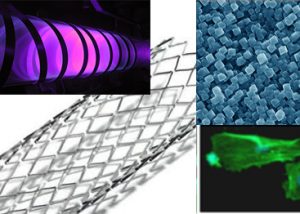
Therefore the main goal of the proposed project is to provide advanced stent surfaces which will lower the risk of restenosis as well as thrombosis, without the need to use coatings. This will be achieved by electrochemical anodization and plasma treatment technique. By electrochemical anodization we will form self-assembled layers of vertically oriented TiO2 nanotubes with defined diameters between 15 and 100 nm. These surfaces will be further treated by highly reactive plasma in order to increase oxygen content on the surface and to remove surface residues obtained from electrochemical anodization. As sterilization is the final surface treatment step, which should be considered before implementation, systematic studies on effects of commons sterilization techniques on surface properties as well as on the biological response will be conducted. Biomimetic surfaces are increasingly recognized for their surface features as they were shown to highly influence on tissue acceptance and cell survival. However effects of surface chemistry and wettability should not be neglected as synergistic effects can be achieved by fine tuning morphological and chemical features. Our previous results (obtained in the frame of ARRS project »Preparation of hemocompatible polymeric surfaces for biomedical applications«, Z3-4261, 2011 to 2013) on plasma treatment of vascular grafts made of polymers indeed showed significant reduction in platelet adhesion and activation, while enhanced proliferation of endothelial cells due to nanostructuring and functionalizing the surface by plasma (formation of oxygen functional groups). As titanium surface cannot be nanostructured by plasma, electrochemical anodization will be employed and surface chemistry will be appropriately altered by high reactive plasma. In tight collaboration with experts in material engineering, surface sciences, plasma physics and medicine we will be able to accomplish desired biological response on titanium surface. Therefore we aim to develop new generation stents by combining the two novel techniques (electrochemical anodization and plasma treatment). By this we believe to fabricate appropriate nanostructure as well as surface chemistry which will reduce smooth muscle cell growth, prevent platelet adhesion while promoting proliferation of endothelial cells.

Selective plasma oxidation of FeCrAl alloys for extended-lifetime of glow plugs for diesel engines (L2-8181)
Project leader: Prof. Dr Janez Kovač (Jozef Stefan Institute)

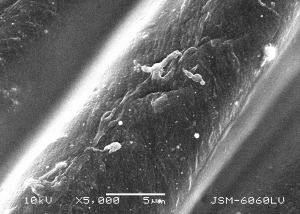
The service life of a glow plug in a diesel engine is limited by the lifetime of its heating resistor which is usually made in the form of a wire from the high-temperature-resistive alloy Fe-Cr-Al and operates at 1200 °C. A protective oxide scale of -Al2O3 is formed on the surface of the wire, which protects it against the diffusion of foreign atoms from and to the surrounding atmosphere. However, mechanical stress, thermal shock, different temperature-expansion coefficients of the oxide scale and the substrate may lead to spallation of the Al2O3 protective scale and to degradation of the resistor and, finally, to the failure of the glow plug. There are a variety of approaches used to avoid such damage to the protective oxide scale, but they do not resolve this problem.
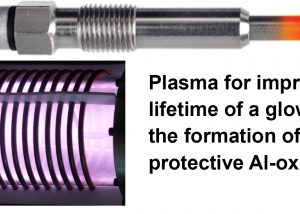
Our proposal to avoid failure of the Al-oxide film at high temperature and thereby extend the lifetime of the glow plug is the formation of a nanocomposite and homogeneous Al-oxide protective scale/film on the Fe-Cr-Al alloy by selective low pressure plasma oxidation and by the use of modified Fe-Cr-Al alloys. To the best of our knowledge, such a solution has not been proposed before. An oxide film prepared by plasma oxidation should have much better adhesion. Our group at the Jozef Stefan Institute has many years of experience in this field. We propose a low pressure plasma treatment as a proper combination of a reductive and an oxidative plasma treatment using H2 and O2 gases in a two-stage process to provide the selective and controlled formation of a compact and homogeneous Al2O3 layer on the Fe-Cr-Al alloy. The thickness of such a film can be tuned in the range 20–500 nm. Preliminary trials performed on heating wires that were selectively oxidized using a low-pressure plasma in our laboratories and tested at our industrial partner in this project (Hidria AET) show very promising results. In the project we will study the two-phase plasma treatments investigating the duration of phases, the oxidation rate as a function of the density of ions and the neutral species in the plasma, the degree of dissociation, the type of plasma and the discharge conditions. Life-time measurements of the modified glow plugs will be performed at the industrial partner Hidria AET. The third partner in the project (NTF Uni-Lj) will prepare alloys with an increased concentration of Al and other reactive metals (Ti, Zr) by melt-spinning. In this way the influence of alloying elements on the kinetics of oxidation will be followed. Due to changes in the surface chemistry introduced by the plasma oxidation of the heating wires it will be necessary to adopt the existing joining technology for the oxidized heating element on the tube of the glow plug. This will be performed by the fourth project partner (Faculty of Mechanical Engineering, Uni-Lj).
We plan to protect the innovative technology derived from the project with international patents, after which we plan to publish the main results in scientific journals. We expect that the improved performance of the glow plug will extend its lifetime by 10-20 %. In this way the industrial partner will gain an advantage over the competition, increase its market share and added value for this product. New generation of glow plugs will fulfil ecological standards, like EURO VI and EURO VII, which are related to lower emissions of nitrogen oxides (NOx) and solid particles having a positive impact on health and general living conditions. The number of employees at Hidria AET is also expected to increase due to the production process of the new product.
Evaluation of the range of plasma parameters suitable for nanostructuring of polymers on industrial scale (L2-8179)
Project leader: Prof. Dr Miran Mozetič (Jozef Stefan Institute)

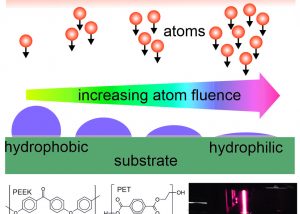
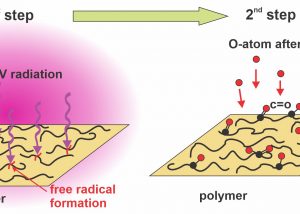
The range of plasma parameters suitable for nanostructuring, functionalization and optimal wettability of polyethylene terephthalate (PET), polyethylene (PE), polycarbonate (PC), polyphenylsulphide (PPS), polypropylene (PP) and ethylene tetrafluoroethylene (ETFE) in a reasonable treatment time will be evaluated. The flux of positively charged oxygen ions will be varied between about 1017 m-2s-1 to about 1020 m-2s-1 by adjusting discharge parameters, and the flux of neutral oxygen atoms onto the polymer surface from about 1019 m-2s-1 to almost 1024 m-2s-1. The flux of neutral atoms will be varied independently from discharge parameters (and thus the ion flux) using a movable recombinator. The corresponding fluences will be achieved by variation of treatment time. Plasma parameters will be measured by electrical and catalytic probes, optical spectroscopy and mass spectrometry, while surface finish by atomic force and scanning electron microscopies, X-ray photoelectron spectroscopy and secondary ion mass spectrometry. The polymers for which super-hydrophilic surface finish will not be achievable by treatment in oxygen plasma for about 10 s (this is the requirement of our industrial partner and co-funding organization) will be treated using an innovative two-step process. The optimal range of plasma parameters will be determined in a small reactor of volume 1 litre. Upscaling will be realized in two steps, first with a medium-size reactor of volume 100 litres and finally in a large-size industrial reactor of volume 5000 litres. The coupling of discharges suitable for achieving the optimal range of plasma parameters as determined in the small reactor will be studied for large reactors first theoretically and then experimentally using alternative electrode configurations. Once optimal plasma parameters are achieved in the medium size reactor it will be proposed for pilot production of components for automotive industry in semi-continuous mode. Irrespective of company decision, an alternative coupling of discharge as well as a different RF generator will be tested also in the large reactor. The results of the research activity will enable our industrial partner to optimize the production of components for automotive industry. Innovative solutions will be protected by a couple of patent applications, one on the two-step process and another on innovative coupling between RF generator and gaseous plasma in large reactors. The scientific results will be published in topical journals in the field of plasma processing of polymer materials as well as applied surface science and a monograph on influence of reactive gaseous species on evolution of surface morphology and functional properties will be prepared.
Heterogeneous surface recombination of neutral reactive plasma species on nanostructured materials (Z2-7059)
Project leader: Dr Gregor Primc (Jozef Stefan Institute)

Heterogeneous surface recombination of neutral oxygen and hydrogen atoms on advanced nanostructured materials suitable for the catalyst tips of laser-driven catalytic sensors will be studied experimentally. The existing experimental reactor will be equipped with a couple of atom sources employing microwave discharges in the surfatron mode, a movable copper mesh for adjusting the atom density independently from discharge parameters and a system for measuring the recombination coefficients using the Smith’s configuration. Nanostructured materials whose recombination activities are supposed to be superior will be prepared either by anodic oxidation or by plasma synthesis of metal oxide nanostructures according to our original method. Apart from nanotubes and nanowires of high aspect ratio, two dimensional nanowalls of metal oxides will be synthesized as well and their stability upon treatment with neutral O- and H-atoms at elevated temperatures will be studied. The recombination coefficients for oxygen atoms for iron, copper, nickel, titanium and palladium oxides will be determined systematically at different temperatures from room temperature to about 1000 K at different fluxes of neutral atoms onto the nanostructured catalysts. The density of atoms in the vicinity of the catalyst will be adjusted by placing a copper mesh at different distances from the catalyst. Any pressure dependence of the recombination coefficient will be determined from measurements at different pressures from about 10 Pa to 1000 Pa and at constant atom density. The constant atom density will be adjusted independently from atom density in the microwave plasma using the movable mesh which will serve as a sink for atoms. Any reversible and irreversible change of the recombination coefficient versus the catalyst temperature will be elaborated. The oxide nanostructures will be reduced by exposure to as-synthesized nanostructured catalysts to hydrogen plasma. The reduction of the oxide versus catalysts temperature will be studied as well as the stability of the morphology upon reduction. The recombination coefficients for hydrogen atoms will be determined systematically on such structures, following the procedure adopted for oxygen atoms. The measurements will reveal materials of different catalytic activity for O and H atoms and thus selectivity in terms of atom detection. The results will represent a solid background for development of a multi-catalyst sensor for real-time monitoring of the density of said atoms in processing plasmas nowadays used on industrial scale. The novel sensor will be suitable for process control in advanced eco-friendly technologies of polymer activation, selective etching of organic compound from composite materials as well as discharge cleaning of components in electro and automotive industries.

Development of new, environment-friendly approaches for plant and human virus inactivation in waters (L4-9325)
Project leader: Prof. Dr Maja Ravnikar (National Institute of Biology)
Investigator: Dr Gregor Primc (Jozef Stefan Institute)

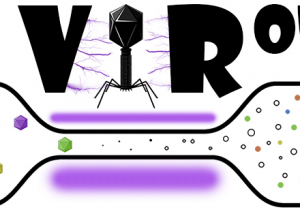
Water intended for human consumption (i.e., drinking water), or for human related activities (i.e., irrigation in agriculture), should preferably be free from different harmful contaminants that range from chemicals and organic compounds, to microbiological hazards. The accepted concentrations of such contaminants are regulated through specific water directives in different regions worldwide. Bacteria have traditionally been in the forefront of research among microbiological contaminants in water, while human and plant viruses were discriminated, due to the lack of appropriate concentration and diagnostic methods for viruses. Lately, methodologies have become more available and viruses are being increasingly causatively related to disease outbreaks (usually gastroenteritis) or crop losses. Therefore proper cleaning and efficient virus disinfection methods are urgently called for. The USA Environmental Protection Agency states that a proper water disinfection method should reduce the viral load by 4 logs, while new European legislation is in preparation. In this project, experts in virology, mechanical engineering and plasma chemistry and physics, will aim to contribute to the field of waterborne virus inactivation with two innovative technologies that have already been applied for bacterial and organic compound disinfection, but whose power has not been tested yet for viral inactivation: hydrodynamic cavitation and gaseous plasma. While hundreds of research groups worldwide work on plasma treatment of water and several are involved in cavitation, this project represents the first attempt to combine the two techniques and benefit from synergistic effects. According to our hypothesis, cavitation will provide numerous dense water-vapour bubbles that will be used to create gaseous plasma rich in OH radicals, other reactive species and UV radiation for immediate oxidation of viruses on the bubbles’ surface, which will increase the destruction efficiency by orders of magnitude compared to separate treatments by cavitation or plasma. As soon as the proof of concept will be confirmed we will consider a patent application. The efficiency of the proposed method for virus inactivation will be assessed on different plant and human model viruses with different virus characterization tools, that target different viral components, such as particle integrity (Electron microscopy), genome integrity (Nanopore sequencing, PCR) and infectivity assays. The inactivation efficiency with traditionally used techniques such as chlorination will be tested in parallel to evaluate advantages of the new technique. One of the drawbacks of traditionally used virus inactivation methods like chlorination is the release of disinfection by-products. Here we will evaluate the potential effect of the water treated with both cavitation and plasma on plant’s growth and development, toxicity to human cells and compare it with the effects of a chemical treatment i.e., chlorination. In collaboration with the project partner at the wastewater treatment plant Domžale, we will also asses the suitability for upscaling the technology to a water treatment plant level, so commercialization of the technology is foreseen after termination of this project. This could be achieved with the involvement of the Ministry of agriculture, forestry and food, which is included as a financer. The dissemination of the project results will raise public awareness and alert the responsible stakeholders to the waterborne microbe problematics and solutions offered by the project. This is especially important in the field of reusable water resources management, which is more and more important due to climate change and the lack of high quality water resources.


Innovative configuration of inductively coupled gaseous plasma sources for up-scaling to industrial-size reactors (L2-9235)
Project Leader: Prof. Dr Miran Mozetič (Jozef Stefan Institute)

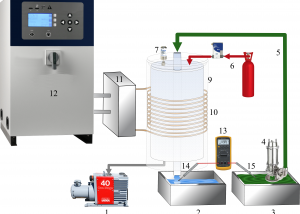
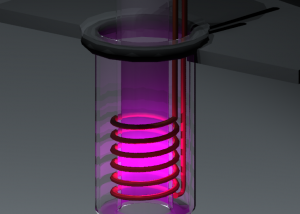
The coupling between radio-frequency (RF) generators and inductively coupled gaseous plasma in the predominant H-mode will be studied. An innovative multi-coil system for creating low-pressure gaseous plasma in large reactors suitable for treatment of materials of almost arbitrary shape and large dimensions will be constructed and tested thoroughly. The efficiency of energy transfer from the RF generator to gaseous plasma will be optimized. Plasma characteristics will be studied using a cut-off probe, floating electrical probe, optical emission/absorption spectroscopies (including actinometry and titration) and catalytic probes. Gradients of both charged and neutral reactive gaseous species will be determined in the plasma reactor loaded with different samples. The innovative coupling will be protected with a patent application. The innovative solution will be suitable for upscaling to large-size industrial reactors and will allow the industrial partner (co-financier of this project) enter the niche of custom-made plasma systems. Such plasma systems are characterized by very high added value and will be useful for advanced plasma technologies such as nano-structuring of carbon-containing materials for future applications in electro-chemistry, particularly for automotive industry.


Carbon nanowalls for future supercapacitors (L2-1834)
Project Leader: Prof. Dr Alenka Vesel (Jozef Stefan Institute)

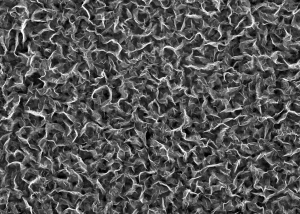
Inductively coupled radio-frequency gaseous plasma (ICP) will be used for a rapid deposition of vertically oriented graphene sheets (thereafter: carbon nanowalls). The structure will be suitable for fabrication of electrostatic double layer capacitors of superior properties. The carbon nanowalls will be deposited from precursors synthesized in-situ in a plasma reactor by interaction between reactive gaseous species created in plasma of a moderate ionization fraction typical for ICP in the H-mode. Working gas will be carbon dioxide. Radicals such as O atoms and CO molecules in excited states will interact with a graphite placed inside the reaction chamber to form metastable oxocarbon molecules of a large C/O ratio. The oxocarbon molecules will diffuse in the reaction chamber until they rich the substrate where they will decompose and provide building blocks for carbon nanowalls. The desired growth rate will be of the order of 100 nm/s what is orders of magnitude larger than in the case of the growth using a typical plasma-enhanced chemical vapour deposition (PECVD) with hydrocarbon precursors which is used nowadays. The properties of carbon nanowalls will be studied versus the discharge parameters. The goal is optimization of technology to synthesize about 5 micrometres thick layer of carbon nanowalls uniformly over the substrate area of about 100 cm2 in the time scale of about 10 s. The best deposition conditions in terms of uniformity, growth rate and properties of carbon nanowalls as well as energy efficiency will be determined experimentally. Thorough characterization of samples deposited at various conditions will enable drawing correlations between discharge parameters and deposition kinetics. Also plasma will be characterized in details what will enable drawing correlations between plasma parameters and properties of the deposited nanowalls. The samples will be further treated with mild gaseous plasma to obtain superior surface properties including the wettability which will be tailored almost arbitrary between super-hydrophobic and super-hydrophilic surface finish. Commercially interesting solutions will be protected by a patent application, while scientific aspects will be prepared as scientific papers which will be submitted to renowned multidisciplinary journals.


Innovative sensors for real-time monitoring of deposition rates in plasma-enhanced chemical vapour deposition (PECVD) systems (L2-1835)
Innovative sensors for real-time monitoring of deposition rates in plasma-enhanced chemical vapour deposition (PECVD) systems
Project Leader: Prof. Ddr Denis Đonlagić (University of Maribor, Faculty of Electrical Engineering and Computer Science)
Investigator: Dr Rok Zaplotnik (Jozef Stefan Institute)

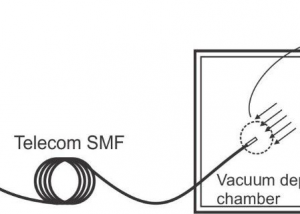
An innovative sensor for real-time monitoring of the deposition rates for thin dielectric films in Plasma-Enhanced Chemical Vapour Deposition (PECVD) systems will be constructed and validated. An interdisciplinary team consisting experts in optoelectronics, plasma science, plasma technology and sensor technology will be established. The team will consist of partners from a university, a public research institute, a private research centre and an industrial partner. The team will construct a sensor suitable for data acquisition in a time scale of about 100 ms with the sensitivity of about 1 nm. The sensor will be first tested in a small experimental system for reactive sputter deposition available at the University. Prototypes will be then validated in a system for PECVD deposition of thin films using hexamethyl di-siloxane precursor at the Institute, and further validated in a 5 cubic meters large system for PECVD deposition of thin silicon dioxide layers on polymeric components of complex shape and rather large size. This system is used routinely for depositing protective layers on head lamps for automotive industry. The experts from the private research centre will construct an appropriate power supply including electronics for automatic data acquisition. The deliverable of this applied research project will be therefore an industrial prototype of a sensor ready for use in PECVD reactors worldwide. The original solution will be protected with a patent application, while the scientific aspect will be disseminated by papers submitted to prominent topical journals as well as through presentations at plasma conferences. The co-funding organization and beneficiary of this project will be able to commercialize the sensor soon after accomplishing this project. The sensor will be flexible enough for application in plasma reactors of various sizes using different discharges for sustaining non-equilibrium gaseous plasma. It will be small and will represent a price-effective alternative to standard methods for in-situ measuring thicknesses of thin films upon deposition in plasma reactors.


Initial stages in surface functionalization of polymers by plasma radicals (J2-1728)
Project leader: Prof. Dr Manja Kurečič (University of Maribor, Faculty of Electrical Engineering and Computer Science)
Investigator: Prof. Dr Janez Kovač (Jozef Stefan Institute)

Initial stages of polymer functionalization with different functional groups will be determined experimentally. Results will represent a breakthrough in understanding the complex mechanism involved at interaction of reactive gaseous species with polymer surfaces. For the first time, the polymer surfaces will be exposed to variable fluences or reactive plasma radicals and the evolution of various functional groups with increasing fluences will be determined without breaking vacuum conditions using our high-resolution XPS instrument. The fluences will be measured precisely using specially adopted laser-driven catalytic probes. The evolution of functional groups versus fluences will be determined separately for oxygen and fluorine atoms as well as NHx radicals. The sources of these species will be microwave-driven discharges at variable powers. Three sources will be mounted onto the treatment chamber employing oxygen, ammonia and tetrafluoromethane as working gases. Gases will be introduced into the discharge chambers through flow controllers and will dissociate to radicals upon plasma conditions. The radicals will then enter the processing chamber which will be pumped continuously to assure for a rapid transfer of radicals from the plasma region to the samples with reasonable loss due to recombination or association to parent molecules. The entire experimental setup will be UHV compatible so the concentration of gaseous impurities will be marginal. The project will employ experts in polymer and plasma science as well as experts in construction of custom-designed plasma systems, high-frequency plasma sources and surface characterization. The results will be published in reputable topical journals and we shall also write a monography on initial stages of polymer functionalization. Such a monography is currently not available since no group worldwide has performed experiments foreseen within this project. The dissemination will be through scientific meetings and media.

Structural and surface properties of fibrous membranes for purification and chromatographic separation of biomacromolecules (J2-1719)
Project leader: Prof. Dr Vanja Kokol (University of Maribor, Faculty of Mechanical Engineering)
Investigator: Dr Ita Junkar (Jozef Stefan Institute)

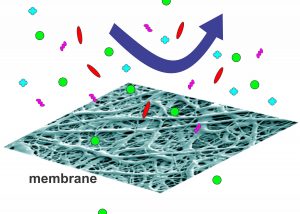
Current trends in the purification of biopharmaceuticals are driven by higher productivity, lower cost of production and increased development speed, while achieving strict regulation requirements related to the purity levels in final formulations. This may be accomplished by either reducing product doses or increasing production scale. Another trend is the increased use of disposable systems or single-use membranes, which eliminate the need for the development and validation of cleaning cycles. Membrane technologies have, thus, become essential in current downstream processes, starting with the complete and sterile bacteria filtration, followed by separation of the cells to capture and concentrate the products, and continued with the removal of impurities during the polishing steps using chromatography. The critical step in a profitable purification is to carry out separation in a highly efficient manner, (with low energy consumption and minimal throughput time), safely and reliably.
In this project, we aim to investigate the preparation/manufacturing process for developing of novel low-cost and high-flow fibre-based filters and ion-exchange membranes, which may act as a complementary method to the existing polymeric-based filters or expensive chromatographic CIM monolithic cartridge-based systems, to enable: i) High and sterile bacteria filtration retention, ii) Efficient gDNA and endotoxin removal, and iii) Chromatographic purification/separations of proteins, with high performance and economic feasibility.
The membranes will be prepared by merging existing textile, paper and composite technologies optionally in a combination with advanced plasma processing, to modify or functionalize the fibres’ surface further chemically with a specific ligand, and, thus, to tailor/increase the membrane surface area and mass transfer properties with good binding capacity, supporting efficient biomolecules` purification, separation and recovery.
The most important challenge, being also a synergistic key point, will be to create differently nano-to-micro vs. micro-to-macro sized and inter-connective porous materials of various surface/interface properties (charge, hydrophobicity), and, thus, to adjust the membrane manufacturing process with the final application requirements (i.e. good pressure/pH/sterilization stability, small/no swelling/shrinking and good/high permeation flow, accomplished with good filtration/separation performance in terms of retention and permeability).
In order to understand the filtration and chromatographic performance of the created membranes, several parameters will be addressed, including the starting materials before and after their modification, up to evaluation of basic membrane properties, such as morphology (pore size and geometry, pore size distribution and inter-connectivity, surface area, density), mechanical strength and compression vs. stress-strain stability, physico-chemical properties (thickness, surface charge type/quantity and distribution, hydrophobicity, swelling/sorption and shrinking behaviour under different pH, ionic strength), molecular weight cut-off definition, permeability vs. binding capacity and recovery, as well as sterilization, cleanability and reusing, by using relevant analytical techniques and colloidal filtration/separation theoretical principles.
This will be the most important impact on the results, and, as such, through the proof-of-concept principle (reaching TRL3), will contribute greatly to the technical knowledge in that field, covering also textile, material, technical, and chemistry sciences, as well as filtration and separation processes. In addition, the knowledge generated can be used to develop specific fibrous structures for many other applications, such as water reuse (cleantech) applications, beverage processing, and air filtration. A strengthening of research cooperation between all involved groups is expected to continue further under European or other inter/national programmes.

Ecologically friendly in-situ synthesis of ZnO nanoparticles for the development of protective textiles (J2-1720)
Project leader: Prof. Dr Marija Gorjanc (University of Ljubljana, Natural Sciences and Engineering)
Investigator: Dr Gregor Primc (Jozef Stefan Institute)

Two new, ecologically friendly methods of forming zinc oxide (ZnO) nanoparticles directly on textile substrates (in-situ synthesis) will be investigated. The textile substrates of choice are cotton and polyester, two mostly used polymers in textile industry. In the first – wet-chemical method, in-situ synthesis of ZnO nanoparticles will be carried out using zinc-containing precursors (Zn chloride, acetate and nitrate) and a biological (phytochemical) reducing agent. The latter will be extracted from food waste (avocado pit and peel, green tea leaves and pomegranate peel) and invasive plant species (leaves and fruit of Staghorn sumac, leaves and rhizome of Japanese knotweed). The conditions such as concentration of entering chemicals, time and temperature of synthesis will be the same in first part of the research. However, the Zn-precursor and reducing agent type will be varied to find the optimal combination for synthesis. After that, the optimisation of wet-chemical in-situ synthesis will be investigated by lowering the concentration of precursor and reducing agent, and finally the time of the synthesis. In order to accomplish the task successfully, we will increase the reactivity of textile substrates, especially the hydrophobic polyester. The reactivity of textiles will be increased by a brief treatment in low-pressure oxygen plasma at low power density, which will allow the neutral gas kinetic temperature to be close to room temperature. Processing plasma parameters (gas pressure, discharge power, treatment time) will be varied to obtain functionality of the textiles that will allow maximum adsorption of chemicals during the synthesis and formation of ZnO nanoparticles on textiles. The knowledge about the behaviour of the textile substrates during plasma treatment will be used to overcome the difficulties in the second, dry-chemical method of in-situ ZnO synthesis. Here, the ZnO nanoparticles on the fibres will be formed in low-pressure plasma systems. The dry textiles impregnated with ZnCl2, will be treated in oxygen plasma to transform the impregnation into ZnO nanoparticles. We will perform the experiments in radiofrequency (RF) and pulsed microwave (MW) plasma reactors, where the textiles will be treated with plasma glow (in RF) or predominantly afterglow (in MW). To gain deeper understanding of gaseous plasma capabilities as synthesis and processing tool, the plasma parameters during in-situ synthesis of ZnO nanoparticles will be analysed using optical emission spectroscopy (OES) and laser-powered catalytic probes (LCP). The success of in-situ synthesised ZnO nanoparticles, chemical and physical changes of modified textiles, and their protective and functional properties will be monitored by standardised and advanced analytical methods such as XPS, SIMS, FTIR, SEM and AFM. Both processes of in-situ synthesis of ZnO nanoparticles represent a completely new approach to textile modification for the development of multi-protective and multifunctional textiles, and provide the possibility of synthesizing other nanoparticles and nano-structures on textiles. Both approaches are crucial in successfully overcoming technological and ecological issues in the field of textile and fibrous-polymer modification processes. The results will enable publication of original scientific papers in top journals with a high impact factor, and at least one patent.