Semi-industrial upgrade and automation of a low-pressure plasma system in a supercavitation bubble for cleaning irrigation water (and beyond)
Project Leader: Assoc. Prof. Dr Gregor Primc (Jozef Stefan Institute)

Slovenian health care was put to the test when the pandemic began in early spring 2020. Although government measures slowed down the spread of the virus, which bought time for reorganizing public health care, the pandemic still claimed too many victims. One of the first measures was the mandatory use of protective masks. Disposable medical masks reliably capture most viruses in exhaled or inhaled air but do not inactivate them.
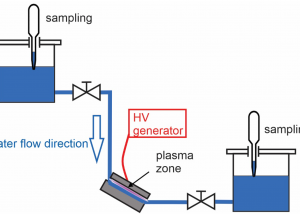
Our team has developed an innovative technology that combines cold plasma and supercavitation for water decontamination, specifically for virus inactivation. This technology is patented and has shown excellent results in inactivating the MS2 bacteriophage and degrading pharmaceutical compounds. We are now entering the phase of automation and increased flow rates to move towards industrializing the solution.
The project objectives are to build and automate a medium-scale system for treating liquid water with the aforementioned technology. The system will first be validated on the MS2 bacteriophage to determine the configurations and parameters that provide the best inactivation results. The most promising configurations will then be tested on other contaminants, such as bacteria, to ensure broader effectiveness, and on effluent from a wastewater treatment plant with added MS2 bacteriophage to test under additional organic load.
Following successful optimization, the next steps will involve scaling up the device and conducting extensive tests on various pollutants. This progress is essential to bring the technology a step closer to commercialization and widespread use.
Plasma-based approaches to purify industrial process cooling water (L2-70119)
Project Leader: Assoc. Prof. Dr Rok Zaplotnik (Jozef Stefan Institute)

Water scarcity and industrial water use pose significant environmental challenges, with Europe consuming 45% of its freshwater for industrial purposes. Cooling systems, a major water-intensive component, require frequent water replacement due to microbial contamination. Traditional disinfection relies on chemical biocides, which, while effective, pose issues such as high costs, harmful byproducts, environmental risks, and the emergence of resistant microorganisms. To address these concerns, plasma-based disinfection technologies offer a promising alternative.
Plasma, an ionized gas rich in reactive species, generates reactive oxygen and nitrogen species (RONS) and plasma-activated water (PAW), which exhibit strong antimicrobial properties. These species disrupt microbial cells, reduce biofilm formation, and prevent replication without harmful residues or risks of resistance. Plasma systems are environmentally friendly, cost-effective, and operate using only electricity and air.
This research focuses on optimizing plasma parameters (e.g., power, discharge type) and reactive species for industrial cooling water disinfection. A case study at Melamin d.d., a Slovenian company, highlights the urgent need for sustainable solutions. Melamin’s system treats 2,400 m³ of water monthly, using biocides with environmental risks and costs exceeding €4,500. Plasma technologies, developed in this project, aim to reduce microbial loads, operational costs, and environmental impact.
Plasma disinfection provides an innovative, scalable solution to industrial water challenges, supporting sustainability and the green transition in water management.


Powerful VUV radiation from low-pressure plasma for cellulose depolymerization (L2-70117)
Project Leader: Prof. Dr Miran Mozetič (Jozef Stefan Institute)

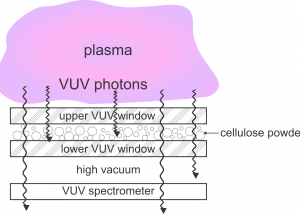
Depolymerization of cellulose is the initial step in the production of bio-ethanol. Depolymerization should enable partial decomposition of cellulose into water-soluble products. Water-soluble products are mono and some oligosaccharides. The next step is to decompose water-soluble products into sugars, which are then fermented into ethanol using standard fermentation. For the initial step, various procedures have been developed worldwide, but they have certain limitations, particularly high cost and/or ecological unsuitability. The limitations could be reduced by using gaseous plasma, which is the key task of this project.
There is little literature on the kinetics of polysaccharide degradation by gaseous plasma. All authors agree that the method is promising. Although treating cellulose with classical atmospheric plasma results in a high degree of depolymerization, the authors report a long-term treatment of approximately 1 hour. However, some authors managed to achieve good water solubility of degradation products by using low-pressure plasma, which is an abundant source of energetic particles, such as VUV photons and fast electrons. In this case, processing times of a few seconds to minutes are required, which is promising for further research on the utility of gas plasma as the first step in bio-ethanol synthesis. Energetic particles break bonds in cellulose, and their penetration depth is significantly greater than the penetration depth of plasma radicals, which are created by atmospheric plasma.
Within this proposed project, we want to elaborate on the mechanisms and determine the reaction probabilities. It seems that the treatment of cellulose with photons in the range of the photon energy from about 6 to 10 eV causes breaking bonds in the cellulose chains and water molecules, and the dangling bonds are occupied with H atoms or OH radicals to form oligo/monosaccharides, which are soluble in water at ambient conditions (room temperature, almost neutral pH).


Plasma sensors for reactors used for depositing dielectric coatings (L2-70112)
Correlations between processing parameters and surface finish of activated polymer samples coated by plasma polymerization in an industrial device (L2-60148)
Project Leader: Dr Žiga Gosar (Elvez)
Investigator: Assoc. Prof. Dr Gregor Primc (Jozef Stefan Institute)

Non-equilibrium gaseous plasma is widely used in modern technologies for tailoring the surface properties of materials. The basic plasma parameter is the density of charged particles. It can be measured by various methods, but electrical (Langmuir) probes are most commonly used and have been commercialized for decades. An electrical probe is a simple device, but interpreting its characteristics can be more complex. As long as electromagnetic interference is manageable, electrical probes operate well in non-depositing plasmas, but experimentalists encounter problems when attempting to use them in plasmas that cause thin-film deposition via plasma-enhanced PVD or CVD processes. Namely, deposits on the electrodes will cause unpredictable effects, leading to misinterpretation of the probe characteristics.
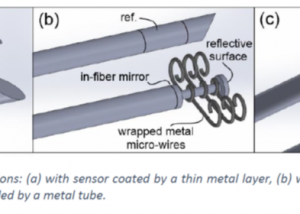
The deposition of a dielectric film on the electrode will make an electrical probe unusable. An innovative probe immune to problems caused by dielectric coating deposition will be developed within this project. Unlike electric probes, the innovative probe will consist of an optical fiber, enabling the measurement of the temperature of a segment adjacent to the fiber tip extending into the plasma. A temperature-sensing segment will be embodied in one of the already known forms, for example, in-fiber Fabry-Perot sensors or fiber Bragg grating sensors. The sensing fiber, containing the temperature-sensitive segment, will be connected to an optical fiber sensor readout unit that will measure the segment’s temperature. The density of charged particles will then be deduced from the measured optical signal.
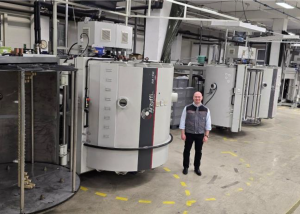
The innovative probe will be used in our reactor to deposit thin protective coatings by plasma polymerization. It is a 4 m3-large commercial reactor that enables the deposition of polydimethylsiloxane-like coatings. The coating is an insulator that protects various products, especially those in the automotive and electro industries. Other exothermic surface reactions that cause probe heating in plasma sustained in hexamethyl disiloxane will be deduced. The project will enable the development of probes that will be used for spatially resolved measurements of plasma density in our large plasma reactor. The reactor will also be equipped with probes for measuring the deposition rate and with optical and mass spectrometers. Such comprehensive plasma characterization will enable precise control of processing parameters, thereby making the industrial reactor robust in line with Industry 5.0 demands.


Promising and innovative eco-friendly method for seed sterilization (L4-70176)
Project Leader: Dr Nina Recek (Jozef Stefan Institute)

Slovenian health care was put to the test when the pandemic began in early spring 2020. Although government measures slowed down the spread of the virus, which bought time for reorganizing public health care, the pandemic still claimed too many victims. One of the first measures was the mandatory use of protective masks. Disposable medical masks reliably capture most viruses in exhaled or inhaled air but do not inactivate them.
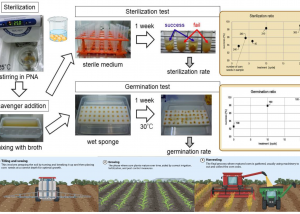
An innovative method for seed sterilization is proposed. The research will be conducted in collaboration with four complementary groups: a public research institute, the Biotechnical faculty, the largest Slovenian seed producer, Inerkorn Ltd., and the company Elvez Ltd. The innovative method will rely on the release of highly reactive oxidizing species upon interaction between the vector and the biological matter (seeds). The vector delivering highly oxidizing species to germs (fungi and bacteria) will be an inorganic acid that is stable in a limited range of conditions but decomposes spontaneously at conditions useful for seed treatment. The highly reactive oxidizing radicals formed upon interaction with the seeds will rapidly inactivate germs. The preliminary results provided proof of concept, as we achieved sterility after less than a minute of exposure to the vector solution at a concentration of 10 ppm. We shall first determine the range of parameters suitable for the synthesis of the inorganic acid. Then, we shall measure the inactivation curves for selected fungi most relevant to the contamination of corn seeds. We shall elaborate on the method for spraying the water solution containing the appropriate vector concentration onto the seeds in a semi-continuous mode using our professional seed treatment device. Once the technique is verified, we shall treat batches of seeds, and the project partner, Interkorn, will sow them in the fields. As control samples, corn treated according to traditional seed preparation methods before sowing will be sown in the fields. We shall monitor the plants’ development from germination to harvest.


Antiviral masks and textiles for use in general healthcare, medicine and crisis areas (J2-70095)
Project Leader: Assoc. Prof. Dr Gregor Primc (Jozef Stefan Institute)

Slovenian health care was put to the test when the pandemic began in early spring 2020. Although government measures slowed down the spread of the virus, which bought time for reorganizing public health care, the pandemic still claimed too many victims. One of the first measures was the mandatory use of protective masks. Disposable medical masks reliably capture most viruses in exhaled or inhaled air but do not inactivate them.
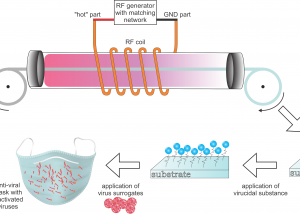
Among the government’s measures was a tender for two-year projects, within which Slovenian research groups were supposed to investigate alternative options for curbing the virus’s spread. Our research group received funding to investigate the feasibility of such a treatment for nonwoven textiles in respiratory masks, enabling rapid virus inactivation in addition to capture. The project was successful, as we produced several mask prototypes and demonstrated their virucidal efficacy. Based on the results of prototype testing, we submitted a patent application. The project was thus accomplished, but it did not enable the widespread use of innovative masks, as additional research is needed for that. As part of the current project application, we intend to investigate the processing parameters in detail to optimize the process. We know that innovative processing is useful for making masks only when we demonstrate that the process is repeatable, reliable, and can be scaled to industrial applicability. In addition, the procedure must be affordable. Research on the inactivation of viruses on selected materials is time consuming, so in the framework of the project, we intend to investigate the influence of process parameters on the reliability of the capture and inactivation of Phi6, a surrogate for coronaviruses, and for selected samples inactivation of murine hepatitis virus (MHV, belongs to the same genus as SARS-CoV-2), on textiles, which are typically used as filter material in disposable respiratory masks ((melt-blown) polypropylene, polyethylene terephthalate, cotton, or lyocell fibers). We will determine the Phi6 inactivation rate as a function of process parameters and identify the parameter range suitable for our respiratory mask process. We will also investigate textile processing in continuous mode, i.e., continuous treatment. The process will also be interesting for treating textile products used in medical practice, such as gowns, (protective) clothes, bedding, drapes, etc. Four complementary research groups with expertise in the following scientific fields participate in the project: materials processing using advanced techniques to tailor the surface properties of porous materials, textiles, virology (microbiology), toxicology, and a certified laboratory.


Application of VUV radiation and plasma radicals for adequate wettability of plastic housings (L7-60162)
Project Leader: Dr Tomaž Gyergyek (University of Ljubljana, Faculty of Electrical Engineering)
Investigator: Prof. Dr Miran Mozetič (Jozef Stefan Institute)

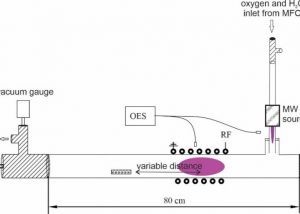
A non-equilibrium gaseous plasma rich in neutral radicals and vacuum ultraviolet (VUV) radiation will be used to modify the surface properties of polytetrafluoroethylene (PTFE) to achieve the desired wettability for adequate adhesion of fillers in the housings of electrical components. A low-pressure, highly nonequilibrium gaseous plasma will be sustained by an electrodeless radiofrequency discharge. The radiation arising from such plasma will be determined with a calibrated VUV spectrometer in a broad range of experimental conditions. The fluxes of photons arising from hydrogen plasma and from plasma sustained in mixtures of argon and hydrogen will be determined as a function of absorbed discharge power and discharge tube pressure. The results will be interpreted and prepared for publication. The best conditions for VUV flux will be used for the treatment of PTFE samples. The influence of both VUV radiation and plasma radicals on the surface finish will be elaborated. VUV photons and plasma radicals’ fluence will be adjusted separately, thus enabling a detailed study of the effects caused by either VUV radiation or radicals. The synergistic effects will be elaborated on as well.


Superhydrophilicity of corn seeds for optimal adhesion of multifunctional coating (L4-60159)
Nanocellulose from eco-farms for optimal enforcement of bioplastics (L2-50078)
Project Leader: Dr Peter Gselman (Interkorn)
Investigator: Assoc. Prof. Dr Gregor Primc (Jozef Stefan Institute)

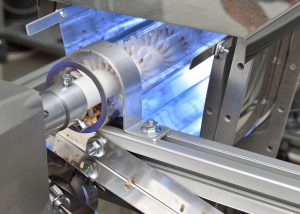
Within this applied project, we will investigate the scientific aspects of an innovative technological process for treating corn seeds prior to application of a multifunctional coating containing a fungicide, insecticide, fertilizer, and other agents used in agricultural practice. The goal of our research is to improve the adhesion of this type of coating, reduce the consumption of active ingredients, and thereby reduce the environmental burden of chemicals. We will first check the effectiveness of the innovative technological process in our laboratories and, in the last year of this project, also in the fields.

Correlations between processing parameters and surface finish of activated polymer samples coated by plasma polymerization in an industrial device (L2-60148)
Project Leader: Dr Žiga Gosar (Elvez)
Investigator: Assoc. Prof. Dr Rok Zaplotnik (Jozef Stefan Institute)

The correlations between the processing parameters and the surface finish of products treated in an industrial device with a volume of about 5 m3 will be presented. The correlations will enable upgrading the device to meet Industry 4.0 standards. The commercial device is suitable for surface activation of products and deposition of various coatings. Of particular interest is the deposition of polydimethylsiloxane-like films deposited by plasma polymerization. The device is currently used in the mass production of components for automotive and other industries, but the quality of the deposited films varies from batch to batch, supposedly due to unpredictable variations in plasma parameters. The device is not equipped with sensors of plasma parameters or deposition rates. We shall develop custom-designed sensors or modify commercial sensors to suit our specific applications. We shall install numerous sensors in the industrial device and perform systematic measurements of the temporal and spatial variations of the following plasma parameters: the density of charged particles, the electron temperature, the space-to-floating potentials, the fluxes of radicals, and the types of molecular fragments that are formed upon partial dissociation of hexamethyldisiloxane precursor. The correlations between the adjustable parameters (the gases and partial pressures in the processing chamber, the discharge voltage, and power) and the plasma parameters will be presented in figures and published in scientific papers. The deposition rates and the quality of the deposited films (composition, structure, morphology, adhesion) will be determined using thin-film thickness sensors and instruments for surface and thin-film characterization (XPS, ToF-SIMS, AFM, SEM). Correlations between the quality of deposited films and plasma parameters will be drawn and published as scientific papers. The scientific papers will represent the first report worldwide on the correlations in plasmas sustained at an extremely low power density of about 1 W per liter. The experimental results will enable the development of a feedback loop to self-adjust the processing parameters to keep them within the optimal range as identified from the correlations. The modified production device will meet Industry 4.0 requirements. The innovative solution for making the device smart will be protected by a patent application.

Innovative, sustainable and reusable plasma device for maintenance of the coliform bacteria analyser (L2-60147)
Innovative, sustainable, and reusable plasma device for maintenance of the coliform bacteria analyser (L2-60147)
Project Leader: Assoc. Prof. Dr Gregor Primc (Jozef Stefan Institute)

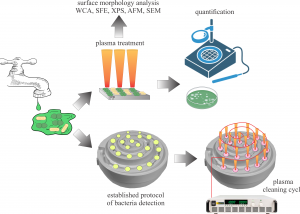
Within this project, we will study the scientific aspects of an innovative technology designed to upgrade a device for rapid detection of a couple of types of bacteria in water: E. coli, fecal bacteria, and Enterococcus hirae. The device was developed a few years ago by Microbium Ltd. and is marketed primarily in EU member states. The device enables the detection of both types of bacteria without the need for biological laboratories or experienced operators. It complies with ISO 9380/2, which defines the protocol for determining bacterial concentration using the MPN (most probable number) method. Chemicals that turn the water sample yellow (for example, E. coli) or green (for fecal bacteria) are added. The degree of water coloration after incubation determines the concentration of bacteria in the sample, which is measured by machine vision. The device has 24 chambers or wells, each containing a different volume of water, enabling a semi-quantitative determination of bacterial concentration in the water sample. This project’s industrial partner and co-financier plans to equip the bacteria-detection device with gaseous plasma to sterilize it. In the framework of the project, we will investigate the interaction of gaseous plasma with model samples of biofilms of both bacteria, possible modifications of the surface properties of the vessel into which the test water sample is poured, and the possibility of upgrading the device with electrodes that will be connected to a voltage source for plasma excitation. Gaseous plasma treatment will enable simple, reliable device sterilization before subsequent use.


Plasma species surface kinetics during functionalization of common polyolefins and superhydrophilic surface finish (J2-60037)
Project Leader: Dr Dane Lojen (Jozef Stefan Institute)

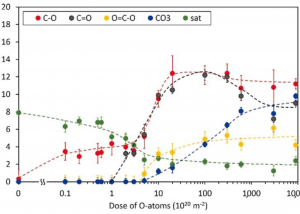
Within the proposed project, the applicant will continue his ambitious research on the kinetics of polymer functionalization using low-pressure, thermodynamically non-equilibrium gaseous plasmas, focusing on polyethylene (PE) and polypropylene (PP). PE and PP are the two most used polymers, but are known for their poor wettability. Despite the abundance of scientific papers on polymer functionalization, the topic remains poorly researched, as the vast majority of authors do not report plasma parameters at all, let alone investigate functionalization kinetics as a function of plasma radical flux or dose. The development of different functional groups as a function of radical dose is the main goal of this project. The applicant will adapt one of the available plasma reactors to precisely dose radicals into a processing chamber for the treatment of PE and PP. The flux of plasma radicals on the polymer surface samples, as well as the development of different functional groups as a function of the radical dose, will be accurately measured. The results of systematic measurements will be curves of surface concentrations of various functional groups as a function of radical dose, obtained at different radical fluxes. The applicant will measure the wettability of both polyolefins using a high-end goniometer and correlate the surface concentration of different functional groups with the surface energy of functionalized polyolefins. The applicant will investigate a method to achieve superhydrophilicity of both polymers, using a method that has proven to be excellent for the hydrophilization of Teflon, where first, the polymer surface is treated with hydrogen plasma (an extremely strong source of vacuum ultraviolet (VUV) radiation), followed by the treatment with a low dose of atomic oxygen from a distant source. As part of the project, the applicant will investigate the dose range leading to superhydrophilicity in both polyolefins using this two-step processing. An important part of the project will be the determination of the kinetics of functionalization of PP and PE with amino groups using a two-step process: the sample is first treated with hydrogen plasma (VUV exposure), followed by treatment with NH2 radicals. The literature in this research niche is scarce, but the demand is high due to biomedical applications of polymers functionalized with the amino groups.
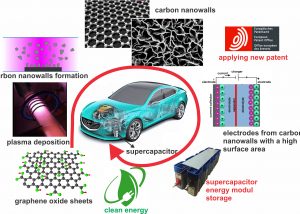
Innovative plasma-assisted synthesis of the next-generation high power density supercapacitor electrodes using graphene oxide feedstock (L2-60139)
Project Leader: Prof. Dr Alenka Vesel (Jozef Stefan Institute)

We will explore the potential of plasma-based deposition of multilayer graphene films for a new generation of high-power-density supercapacitors. Our aim is to investigate the plasma processes and their stability during the synthesis and deposition of such structures, as well as to study suitable material configurations with a high surface-to-volume ratio for the fabrication of laboratory-scale graphene supercapacitor prototypes. We will employ innovative electrolytes and examine their interaction with graphene layers featuring different degrees of functionalization.

Nanocellulose from eco-farms for optimal enforcement of bioplastics (L2-50078)
Project Leader: Dr Peter Gselman (Interkorn)
Investigator: Asst. Prof. Dr Gregor Primc (Jozef Stefan Institute)

Slovenian organic farms follow the policy of the European Union, which tends towards a circular economy and reducing the amount of waste in the production and processing of crops. Farms from eastern Slovenia mainly grow cereals, mostly wheat and corn. After drying, the grains are stored and later sold, while the dried parts of the rest of the plant remain, especially the stems. A smaller part of the straw is used in animal farming, some of it is sold to neighboring regions, and the rest is thrown away. Straw is mainly composed of cellulose and similar polysaccharides, and thus can be a raw material in the production of nanocellulose. Unfortunately, nanocellulose produced in this way is not suitable as a filler for composite materials based on bio-polymers, since the surface energy of nanocellulose from straw is not consistent with the surface energy of the most commonly used biopolymer, i.e. poly(lactic acid) (PLA). After reviewing the literature, we found that the key disadvantage of nanocellulose, especially that which is prepared from waste straw, is excessive surface energy, which does not allow satisfactory wettability in poly(lactic acid) and thus also does not allow satisfactory mechanical properties of composites containing nanocellulose fibers fillers, and the matrix is polylactic acid. Recently, our partners from eastern Slovenia successfully completed a project for environmentally friendly grain disinfection, within the framework of which we developed a large line for continuous processing with a capacity of around a ton per hour. The line allows changing the surface energy of the workpiece, which is grains. We intend to use the device to investigate the process parameters that enable moderate hydrophobization of cellulose nanofibers and thus the adjustment of the surface energy of nanocellulose in relation to the surface energy of polylactic acid. As part of the project, we will investigate the process parameters that enable rapid and moderate hydrophobization of cellulose nanofibers. We will prepare fibers from agricultural waste, especially cereal straw. We will process the fibers with a non-equilibrium gaseous plasma. The goal of plasma treatment is to achieve chemical changes in the ultra-thin surface layer of nanocellulose without simultaneously changing the other properties of nanocellulose. This type of surface modification will be achieved through the absorption of photons of vacuum ultraviolet (VUV) radiation in the surface layer of nanocellulose, which will enable an irreversible decrease in the oxygen concentration and thus a decrease in the hydrophilicity of the nanocellulose synthesized from straw. The goal of the project is to achieve conditions in which such changes occur within a processing time of the order of a second. Such a short processing time would make it possible to demonstrate the innovative process in practice, as more than a ton of nanocellulose could be processed daily. The project will involve and the Jožef Stefan Institute, which has broad competences in the niche of tailoring the surface properties of organic material, especially nanocellulose, and has specific equipment for the routine measurement of surface energy and the composition and structure of the surfaces of organic samples.

Supercapacitors with graphene nanowalls synthesized from waste plastics (L2-50052)
Project Leader: Prof. Dr Alenka Vesel (Jozef Stefan Institute)

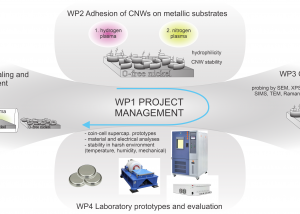
Problems related to energy consumption and production have become the driving force of current development in the world. Therefore, research related to environmentally friendly energy production and storage is one of the highest priorities. A possible solution can be supercapacitors, which are energy devices working on the principle of electrochemical energy conversion. Innovative electrodes useful for the construction of double-layer supercapacitors will be synthesized from waste plastic. Innovative electrodes will be made of densely packed vertically oriented multilayer graphene sheets, which will be applied to nickel substrates using plasma processes. Plasma surface treatment will also be used for the proper preparation of nickel substrates to ensure better adhesion with a layer of vertically oriented multilayer graphene sheets. The carbon precursor will be a waste plastic material. The graphene sheets will be synthesized on the pre-treated nickel foil using nitrogen plasma to benefit from the adjustment of sheet thicknesses and simultaneous doping with nitrogen. The synthesis parameters will be varied in a broad range. The correlations between the synthesis parameters and the properties of the deposited vertically oriented multilayer graphene sheets will be drawn. The samples of the most promising morphology and structure will be used for the synthesis of coin-cell prototypes of supercapacitors. Commercial separators and electrolytes will be used. The prototypes will be thoroughly tested using the standard battery testers, and the correlations between the performances of the prototype cells and synthesis parameters will be drawn. In the last set of experiments, the best examples of the prototypes will also be tested at various temperatures, relative humidity, and mechanical vibrational shaking. The coin-cell prototypes will be open after different stages of the testing, and the materials within the cells will be analyzed by Scanning and Transmission spectroscopy (SEM, TEM), Raman spectroscopy (RS), X-ray photoelectron spectroscopy (XPS) and Secondary ion mass spectrometry (SIMS). The results will enable a frank and critical estimation of the feasibility of using the innovative electrodes in mass production at the premises of Slovenian company Iskra-Capacitors, which serves as the cofunder of this project.


Non-equilibrium plasma processing for superior composite magnets (L1-50007)
Project Leader: Prof. Dr Miran Mozetič (Jozef Stefan Institute)

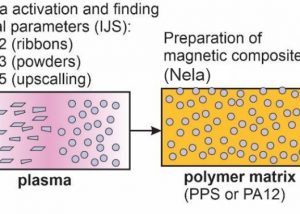
The scientific aspect of plasma technologies for synthesizing composite magnets of superior magnetical, mechanical and chemical properties will be elaborated. The composite materials will be prepared from magnetic and polymer powders by extrusion. The magnetic powders will be pretreated by gaseous plasma before mixing and extruding to adjust the surface properties and ensure the appropriate surface energy of the magnetic powder for wetting the liquid polymer. The pretreatment will be initially performed in a small-scale experimental plasma reactor to determine the influence of plasma radicals on the surface finish of the magnetic powder. A broad range of plasma parameters will be probed and the best conditions selected for synthesizing prototypes of the composite magnets. The magnetic, mechanical, and chemical properties of the prototypes will be evaluated, and the most promising solutions identified. In the next step, the feasibility study for upscaling the plasma-treatment conditions will be performed. The influence of powders on the plasma as well as discharge parameters will be elaborated. A large reactor will be constructed and verified in the industrial environment. The reactor will be used for the treatment of powders in quantities useful for small-scale production. The composite magnets produced from powders treated in the large reactor will be thoroughly characterized for determining the feasibility of mass production. The composite materials will also be coated with a very thin film of a hydrophobic material to suppress the corrosion, which is likely to occur for his type of composite magnets. The coating will be deposited by plasma polymerization in a large, industrial-scale reactor to deposit protective coatings. The range of appropriate parameters useful for the routine deposition of protective coatings will be elaborated. Original technological solutions will be protected by patent applications submitted to the EU office, while scientific aspects of plasma-powder interaction will be published in renowned journals.


Plasma VUV and UV radiation – a method for successful deactivation of Aflatoxins (L7-4567)
Project Leader: Dr. Nina Recek (Jozef Stefan Institute)

This project represents a breakthrough in the scientific approach to the decontamination of aflatoxins from crops. It will achieve this using powerful, nearly continuous UV and VUV radiation in the range of wavelengths between about 100 and 400 nm. The source of such extensive radiation will be H2 and SO2 non-equilibrium gaseous plasma – a VUV and UV radiation source free from mercury. The hypothesis is as follows: radiation at suitable wavelengths causes the deactivation of mycotoxins and thereby inhibits their potential for food poisoning and danger to human and animal health and life. The project will focus on aflatoxins. Its results will enlighten the interaction of UV and VUV radiation of particular wavelengths with aflatoxins and contribute to the understanding of the degradation kinetics of this phenomenon. A powerful source of UV and VUV radiation will be constructed and evaluated for the deactivation of aflatoxins. Apart from the scientific breakthrough, the results will be useful for the commercialization of this approach.


Miniature fiber-optics sensors for free-radical detection in plasma assisted processes (L2-4487)
Miniature fiber-optics sensors for free-radical detection in plasma-assisted processes (L2-4487)
Project Leader: Prof. Ddr. Denis Đonlagić (University of Maribor, Faculty of Electrical Engineering and Computer Science)
Investigator: Asst. Prof. Dr Rok Zaplotnik (Jozef Stefan Institute)

Miniature sensors capable of detecting radicals in non-equilibrium gaseous plasma will be constructed. The sensors will measure the temperature of a short segment of an optical fiber by making the segment a miniature Fabry-Perot interferometer. The segment will be coated with a material of high coefficient for heterogeneous surface recombination of radicals to stable molecules. A plurality of miniature interferometers will be assembled within a sensor, and each interferometer will be coated with different material. Each material will have a specific sensitivity for different radicals. By simultaneous measurements of the temperature of the interferometers coated with different catalysts and development of a smart control unit, the sensor will be able to distinguish between various plasma radicals. The absolute accuracy of the sensors will be about 15%, what is suitable for most industrial applications. The sensors will be first probed in out laboratories. The sensors of best configuration will be probed at three renowned EU plasma laboratories, and finally in industrial environment. A project partner will perform systematic measurements in an industrial reactor useful for the technology of discharge cleaning of various materials, plasma activation of glass products and plasma functionalization of polymeric products. We shall elaborate on the long-term stability and the sensor will reach the TRL6 upon accomplishing the project.


Removal of selected antimicrobials by plasma-cavitation hybrid technology from water matrices of varying complexity (J2-4480)
Removal of selected antimicrobials by plasma-cavitation hybrid technology from water matrices of varying complexity – CAUSMA (J2-4480)
Project Leader: Asst. Prof. Dr Martin Petkovšek (University of Ljubljana, Faculty of Mechanical Engineering)
Investigator: Asst. Prof. Dr Gregor Primc (Jozef Stefan Institute)

Parallel to the growth of the world population and its standard of living, environmental pollution is also increasing. One of the most pressing global problems is the increasing pollution of surface and groundwater, which is leading to a worldwide shortage of water sources. Over the past decade, enough evidence has accumulated to show that pharmaceuticals are constantly entering the aquatic environment through wastewater treatment plants and affecting the receiving aquatic compartments. The problems are exacerbated when hospital wastewater containing high concentrations of various antimicrobials, including antibiotics, is discharged directly into sewage systems.
The relevant authorities in the European Union have become aware of this problem and have drawn up a list of priority substances whose emissions need to be closely monitored. The data collected under this initiative will lead to stricter legislation by establishing acceptable environmental concentrations for these compounds in wastewater discharges. Pharmaceuticals have become an indispensable part of our lives, and since their use is not going to decrease anytime soon, this will only increase their impact on the environment. The situation seems almost intractable, and it is not clear how it could be satisfactorily resolved in the near future. The most adequate solution is to upgrade the existing wastewater treatment processes with alternative processes.
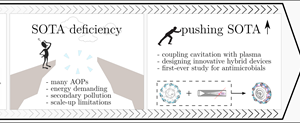
In line with the EU concepts for clean and sustainable wastewater treatment, the proposed Causma project will focus on providing an alternative, environmentally friendly and economically acceptable water treatment technology. Advanced oxidation processes are a powerful tool to achieve oxidation and even mineralization of many hazardous pollutants in water matrices of different complexities, ameliorating their detrimental environmental impact. In the proposed Causma project, we will investigate the effectiveness and efficiency of two advanced oxidation processes, hydrodynamic cavitation and non-thermal plasma. Although the effectiveness of both processes has been demonstrated, there is little or no data on their effects on various pollutants in combination. The Causma project will fill this major gap by innovatively combining the processes into a hybrid technology. In combination, the oxidation potential of the technology will be maximized with minimal energy input. The effectiveness and efficiency of the individual processes and their coupling will be investigated for the pharmaceuticals, particularly antimicrobials from the priority list: erythromycin, clarithromycin, azithromycin, amoxicillin, ciprofloxacin, sulfamethoxazole and trimethoprim. To determine the beneficial effects, the selected compounds will be investigated in MilliQ water and finally on real hospital wastewater samples.
We believe that the combination of hydrodynamic cavitation and non-thermal plasma can provide a treatment technology that is simple, environmentally friendly, economically feasible, robust and easily scalable.

Novel Surface Modification of Dental Prosthetic Replacements by Gaseous Plasma (J3-4502)
Project Leader: Dr. Metka Benčina (Jozef Stefan Institute)

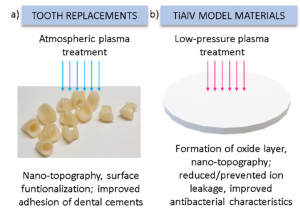
Multidisciplinary project team will focus on the development of rapid and innovative surface modification routes that will allow a reliable and durable bond between dental cement and tooth replacements, without the need to use chemicals that are toxic to the environment and humans. Within the project, ceramic and composite, i.e., metal-ceramic tooth replacements, will be treated with atmospheric plasma in order to improve the direct adhesion of dental cements. Due to the beneficial effects of plasma treatment for various dental materials, the second part of the research will also be focused on ii.) improvement of biocompatibility, in terms of ion leakage and antibacterial properties of widely used titanium alloy (Ti-6Al-4V) as a dental implant material by optimized low‑pressure plasma surface treatment, which will alter surface characteristics of Ti-6Al-4V, in particular morphology and wettability that are crucial for effective antibacterial activity. In addition, plasma treatment will cause the formation of a dense oxide layer on the surface of Ti‑6Al‑4V, which will prevent the release of allergenic and toxic metal ions into the human body.


Waterborne virus inactivation efficiency of a prototype device combining non-equilibrium plasma and hydrodynamic cavitation (L7-3184)
Project Leader: Asst. Prof. Dr. Rok Zaplotnik (Jozef Stefan Institute)

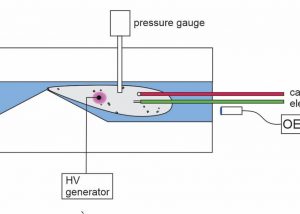
Scientific aspects of innovative technology for treating waters contaminated with plant viruses will be elaborated. The viricidal properties of gaseous plasma sustained in a super-cavitation bubble will be studied. First, a device useful for sustaining a rather stable low-pressure bubble using hydrodynamic cavitation will be constructed. The device will enable the insertion of electrodes for ignition and sustaining a gaseous discharge in the cavitation bubble and probes for characterization of the discharge and plasma parameters. RT-PCR of three long fragments will assess the gaseous plasma treatment effect on the viral RNA integrity spanned almost the whole virus genome. RT-ddPCR will be used to estimate the virus concentrations of the plasma-cavitation-treated waters, while the decay in the infectivity will be estimated by assessing the infection of the model plants. The degradation of viruses upon the treatment will be visualized by TEM. The gaseous discharge versus cavitation parameters’ properties will be measured with an oscilloscope, while the plasma parameters by VUV, UV and visible spectroscopies, electrical probes, and catalytic probes. The correlations between the plasma and discharge/cavitation parameters will be elaborated and published as separate papers. The most useful cavitation/discharge parameters in terms of production of viricidal UV and VUV radiation and OH radicals will be used to study the viricidal activities. Separate papers will be published on destruction kinetics for a few plant viruses versus the plasma parameters. The project team will consist of hydrodynamic cavitation and plasma physicists and virologists.


Innovative procedures for advanced surface properties of medical stainless steel (J3-3074)
Project Leader: Dr Metka Benčina (Jozef Stefan Institute)

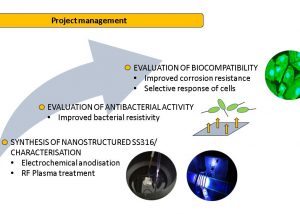
Within the project, surface modification procedures (combination of electrochemical anodization and non-thermal plasma treatment) will be performed in order to improve antibacterial activity and biocompatibility of medical grade stainless steel (SS316). It is expected that this novel approach will alter SS316 surface characteristics, specifically nano topography, composition and wettability, which significantly influence biological response, but at the same time, it will retain mechanical properties of SS316. Moreover, stable surface oxide layer induced by plasma treatment could prevent the release of toxic/allergic elements into the human body. It is expected that such surface modification will also allow direct drug loading on the surface of SS316 without the use of toxic polymer matrixes. This treatment could be applicable for the design of not only medical devices but also other hospital settings made from various metal alloys. Project goals are: i.) Synthesis of nano-patterned SS316 surfaces with the combination of electrochemical anodization and non-thermal plasma treatment; characterization of surface properties (wettability, morphology, surface chemistry, etc.) of SS316; ii.) Evaluation of antibacterial performance of SS316; iii.) Evaluation of biocompatibility of novel SS316; corrosion resistance, hemocompatibility and cytocompatibility.

Development of safe multi-functional surfaces for catheters to combat biofilms (L2-3163)
Project Leader: Dr Alenka Vesel (Jozef Stefan Institute)

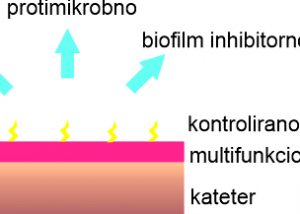
The project addresses urinary tract infections due to urinary catheters. These infections are the most common human health-related infections worldwide, accounting for about 40% of nosocomial infections in Europe or the United States, and the mortality associated with this infection is about 10%. These problems are mainly due to insufficient surface properties of currently used catheters, especially poor bacteriostatic properties. Shortly after infection, a biofilm begins to form on the surface of the catheter. Once the symptoms of the infection become perceptible, antibiotic treatment is rarely successful. This issue will be addressed in the project by a multidisciplinary group that includes scientists from academia, medicine and an industrial partner, which is one of the largest European catheter manufacturers. We will synthesize innovative catheters that will be coated with a layer containing bioactive compounds to improve the human biological response upon catheter implantation. The surface coating will have antibacterial properties and will prevent the growth of biofilms. Such surface treatment will be achieved by a two-step process: first, by a short treatment with gaseous plasma, we will create the appropriate surface morphology and functionalization of the surface, and then we will coat the surface with advanced coatings containing more bioactive substances. We will explore different ways of treating catheter surfaces in order to find a range of parameters suitable for the future production of innovative catheters. We will thoroughly analyze the surface of the materials before and after each treatment process. We will test the antibacterial properties of innovative catheter prototypes, as well as their cytotoxicity.


New strategies for fabrication of biomimetic vascular implants (J3-2533)
Project Leader: Dr Ita Junkar (Jozef Stefan Institute)

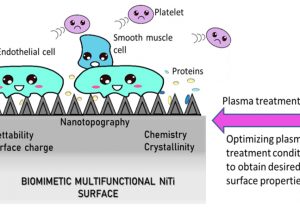
New strategies for fabrication of biomimetic vascular implants Cardiovascular diseases cause millions of deaths all over the world and present a serious healthcare burden. The minimally invasive way to treat diseased blood vessels is by insertion of an expandable tubular stent. Vascular stents have already saved countless lives, but unfortunately, their surface properties are still far from optimal. Hence, many research efforts have been directed in optimizing its surface performance. Thus various coating strategies have been developed in order to improve surface properties of so-called bare metal stents (BMS) and a new generation of drug-eluting stents (DES) was born. The main driving force was to suppress rapid smooth muscle cell (SMC) proliferation, which is connected with the narrowing of the vessel wall (restenosis occurs in 30-50%). It soon became evident that DES could not fully solve this issue, as coatings indeed inhibited the growth of SMCs but regrettably growth of ECs was also suppressed which increased the risk of thrombosis. Since then various attempts have been made in order to improve the surface performance of vascular stents, but unfortunately, only incremental improvements were made. The aforementioned issues clearly show that novel surface treatment strategies should be sought. Thus the aim of the proposed project directs this issue in particular, as novel approaches for surface treatment are proposed based on biomimetic surfaces, which are inspired by nature and will be fabricated by a combination of novel surface treatment techniques; gaseous plasma treatment, hydrothermal treatment and novel plasma anodization method where atmospheric plasma jet will be employed. The first two approaches will be used in combination, while the plasma anodization process is a novel approach and could be used alone or in combination with gaseous plasma treatment. The main goal is to obtain nanostructured surfaces, which provide guidance to cells and could favor the growth of one cell type over another. Surface treatment by highly reactive plasma will be used in order to optimize the formation of high-quality titanium oxide layers in order to improve biological response and corrosion resistance. The main objectives of the project are: i.) Fabrication of nanostructured-biomimetic surfaces (hydrothermal treatment (HT)) followed by surface chemical modification by low-pressure plasma treatment. ii.) Surface modification by low-pressure plasma treatment followed by fabrication of nanostructured – biomimetic surfaces (hydrothermal treatment (HT) or plasma anodization). Plasma electrolysis, as a novel approach, will be studied as a one-step process as it could enable both nanostructuring and surface modification simultaneously. iii.) Optimizing parameters for fabrication of nanostructured-biomimetic surfaces in terms of optimal treatment procedures and treatment conditions used in order to gain desired nanotopography, mechanical stability, corrosion resistance, and biological response. iv.) Evaluating different approaches; their variations in nanotopographies and chemistries on the in vitro biological response with SMCs, ECs and whole blood as well as possible commercial use of optimal treatment approach.

Selected area functionalization of polymeric components by gaseous plasma (L2-2616)
Project Leader: Prof. Dr Miran Mozetič (Jozef Stefan Institute)

Initial stages in functionalization of epoxy polymers using reactive species from non-equilibrium gaseous plasma will be elaborated. Of particular importance are O-atoms, OH radicals and synergies with charged particles and UV/VUV radiation from gaseous plasma. Samples will be treated first with low-pressure plasma to determine the functionalization kinetics and fluences of species needed for saturation of the polymer surface with different polar functional groups. In the next step, atmospheric pressure plasma of appropriate densities or reactive species (as determined in the first step) will be used. The surface finish will be determined by measuring two-dimensional mapping of contact angles of selected liquids, and 2D mapping of surface functionalities by XPS and AFM/SEM. Lateral uniformity of surface activation on a millimetre scale will be elaborated, as well as kinetics of hydrophobic recovery. The goal is uniform functionalization over the printable area of about cm2 in a time scale of about 0.1 s. The results will enable our industrial partner (and co-financer of this applied project) develop a professional plasma device for activation of polymeric products for optimal adhesion of inks deposited by ink-jet printing. The innovative solution might be adopted in mass production of over 100,000 pieces annually if the results are according to hypotheses.


Innovative method for purification of wastewater (L2-2617)
Project Leader: Dr Gregor Primc (Jozef Stefan Institute)

A generally accepted theory is that sterilization effect of UV radiation is due to absorption of UV quanta inside microbes what causes bond breaking between atoms in any organic material, destruction of gene material and thus inactivation of any microbe. Best results are obtained in a rather narrow range of UV wavelengths peaking at about 265 nm. Intensive, inexpensive and quite stable sources of such radiation are low-pressure mercury lamps, which provide radiation in the UVC-range at about 254 nm. A breakthrough in sterilization of water will be provided within this project. Our hypothesis, based on preliminary experiments, postulates an indirect effect: VUV radiation is absorbed in water to produce OH radicals, which then interact chemically with microbes, including viruses, to inactivate or destroy them. Instead of standard germicidal wavelength, we shall use a powerful source of VUV radiation in the range between 170 and 200 nm where bond-breaking of water molecules is feasible. Although the lifetime of OH radicals in liquid water is terribly short, the OH radicals will “do the job” because they will be formed evenly in the entire volume of polluted water and even a small dose is lethal for all microbes. A powerful source of UV/VUV radiation will be constructed and tested for inactivation of different viruses (model virus MS2 bacteriophage, Potato virus Y and/or pepper mild mottle virus). Apart from scientific breakthrough, results will be useful for commercialization.