
Correlations between processing parameters and surface finish of activated polymer samples coated by plasma polymerization in an industrial device (L2-60148)
Project Leader: Dr Žiga Gosar (Elvez)
Investigator: Assoc. Prof. Dr Gregor Primc (Jozef Stefan Institute)
Non-equilibrium gaseous plasma is widely used in modern technologies for tailoring the surface properties of materials. The basic plasma parameter is the density of charged particles. It can be measured by various methods, but electrical (Langmuir) probes are most commonly used and have been commercialized for decades. An electrical probe is a simple device, but interpreting its characteristics can be more complex. As long as electromagnetic interference is manageable, electrical probes operate well in non-depositing plasmas, but experimentalists encounter problems when attempting to use them in plasmas that cause thin-film deposition via plasma-enhanced PVD or CVD processes. Namely, deposits on the electrodes will cause unpredictable effects, leading to misinterpretation of the probe characteristics.
The deposition of a dielectric film on the electrode will make an electrical probe unusable. An innovative probe immune to problems caused by dielectric coating deposition will be developed within this project. Unlike electric probes, the innovative probe will consist of an optical fiber, enabling the measurement of the temperature of a segment adjacent to the fiber tip extending into the plasma. A temperature-sensing segment will be embodied in one of the already known forms, for example, in-fiber Fabry-Perot sensors or fiber Bragg grating sensors. The sensing fiber, containing the temperature-sensitive segment, will be connected to an optical fiber sensor readout unit that will measure the segment’s temperature. The density of charged particles will then be deduced from the measured optical signal.
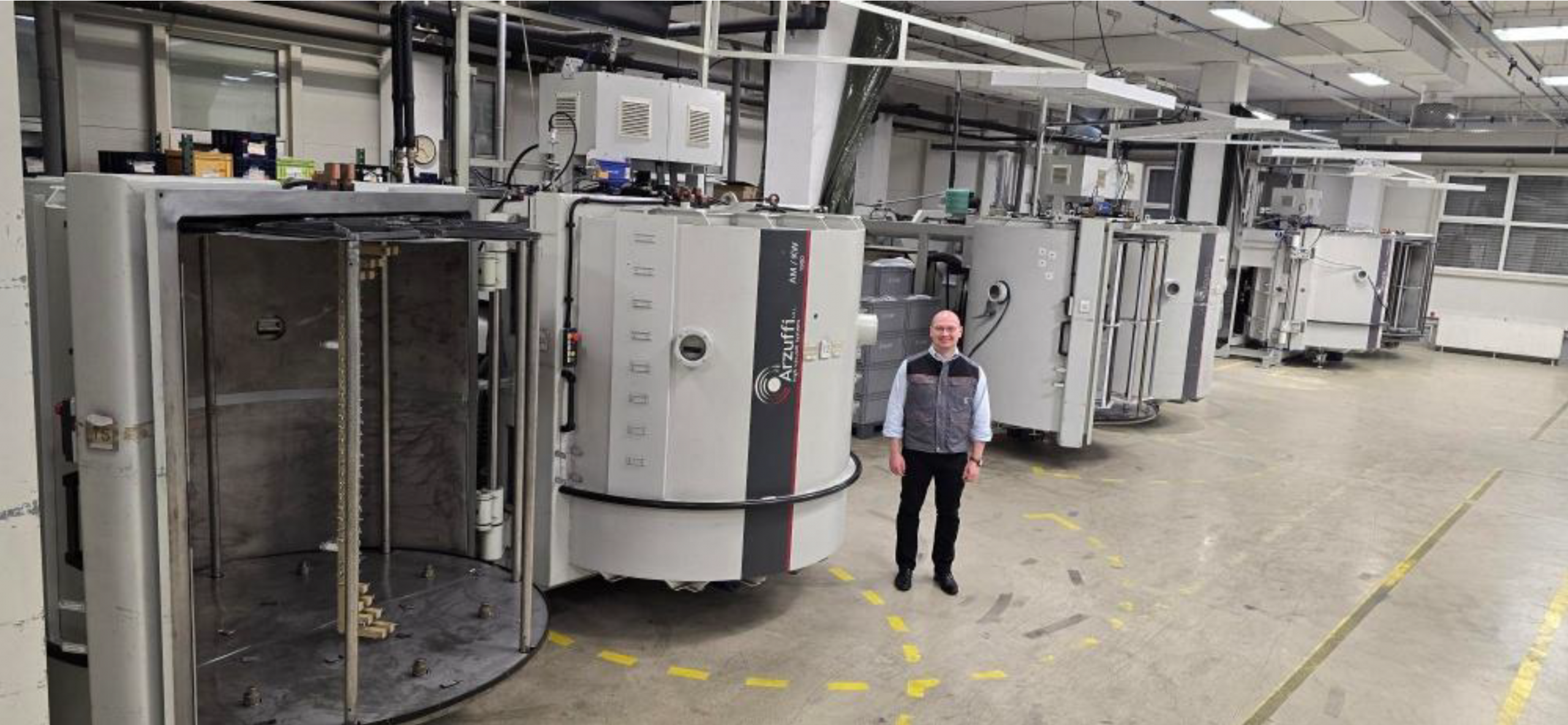
The innovative probe will be used in our reactor to deposit thin protective coatings by plasma polymerization. It is a 4 m3-large commercial reactor that enables the deposition of polydimethylsiloxane-like coatings. The coating is an insulator that protects various products, especially those in the automotive and electro industries. Other exothermic surface reactions that cause probe heating in plasma sustained in hexamethyl disiloxane will be deduced. The project will enable the development of probes that will be used for spatially resolved measurements of plasma density in our large plasma reactor. The reactor will also be equipped with probes for measuring the deposition rate and with optical and mass spectrometers. Such comprehensive plasma characterization will enable precise control of processing parameters, thereby making the industrial reactor robust in line with Industry 5.0 demands.